 Kateryna Ivanova
Quick answer
Virgin Atlantic is more open about its cabin crew recruitment than most UK airlines, but not about the salary on its careers pages. Read at source on 20 November 2026, the pages say you must be 18 or older when you apply, have the right to live and work in the UK, hold a passport that lets you fly to every destination, have three GCSEs or equivalent, and have an arm reach of 210 cm to get to the overhead lockers. No height range appears on them. Selection is an online situational judgement test, then an assessment day, then pre-employment checks and a 4½-week course in Crawley. The careers pages name no pay figure; the last advert did (closing 19 February 2026), and it is quoted in the salary table below. On 20 November 2026 the job search lists six roles and none is cabin crew.
TL;DR:
- No salary on the careers pages, a figure in the last advert. The cabin crew page promises a “very competitive basic salary” that includes base pay, trip pay and commission, plus cash allowances down route. The February 2026 advert, read here only as copied by two job boards, gave a starting basic salary and an average expected trip pay, based on 48 trips a year.
- The requirements are physical, not cosmetic. Virgin publishes a 210 cm reach and a brace-position test in a jump seat 45 cm off the floor, not a height range. The pages say nothing about tattoos.
- Experience is not required on the careers page, but the February 2026 advert asked for at least two years in a customer-facing role. Read the live advert, not the summary.
- The process has four gates: application with CV, an online situational judgement test, an assessment day with other candidates, then references and a criminal records check before an offer becomes a start date.
- The window is closed right now. On 20 November 2026 no cabin crew vacancy is listed. Virgin says a reply usually takes one to three months.
- The “Viv” uniform is a selling point, designed by Vivienne Westwood and made partly from recycled polyester and plastic bottles.
What Virgin Atlantic publishes, and where
Everything below was read on 20 November 2026 on four pages of Virgin Atlantic’s own careers site: the cabin crew page, the recruitment FAQs, the application and assessment page and the benefits page. The FAQ answers sit behind drop-downs and were read from the page text. The job search on the same site was opened on the same day: it listed six roles, none of them cabin crew.
One source is not Virgin’s own page. The advert that closed on 19 February 2026 is no longer online on the careers site, so its wording is taken from two job-board copies of it. Where this guide quotes the advert, it says so. Two details to keep in mind throughout: the base is London Heathrow, and the pages describe long-haul routes from New York, California and Florida to cities in Asia, so this is a long-haul, UK-based job.
The requirements, line by line
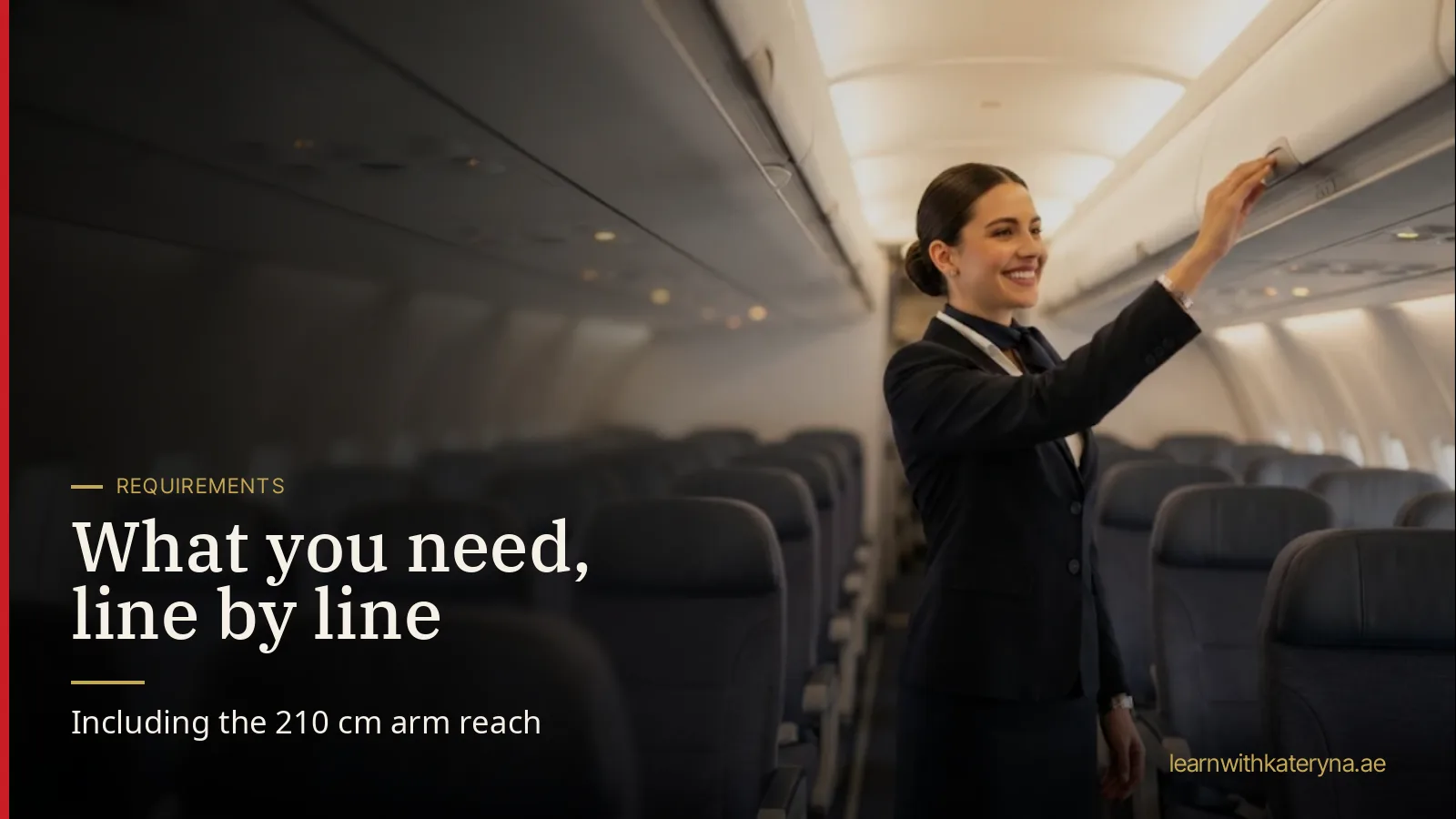
The cabin crew page lists three basic requirements and then a longer “safety-critical role” list. The FAQ adds the attributes that the page leaves out. Here is each one as written, with what it means in practice.
| Requirement (as published) | In practice |
|---|---|
| Be aged 18 or over at the time of your application | The FAQ is explicit: the age requirement must be met at the time of application, and applications from 17-year-olds are not accepted. |
| Have the right to live and work in the UK, with no criminal convictions and applicable work visas if required | The FAQ words it differently: no live criminal convictions or cases pending, including drink-driving convictions. Read both before you decide. |
| Hold a valid passport that permits travel to all the destinations Virgin flies to | The safety list adds that you must travel worldwide without restriction, meeting visa, entry and health requirements, including vaccinations or infection-risk controls where required. |
| A minimum of three GCSEs or equivalent passes | A crew-related course is not necessary. The February 2026 advert, as copied, specified grades A*–C or 9–4 or an equivalent. |
| Good customer service experience | The cabin crew page says previous cabin crew experience is not needed. The February 2026 advert asked for at least two years in a customer-facing role. |
| An arm reach of 210 cm and the brace position in a jump seat | See the next section: this is Virgin’s substitute for a height rule. |
| Swim 25 metres unaided and board a raft from the water using a rope ladder | This appears in the February 2026 advert copies, not on the careers page, so confirm it in the live advert. |
The cabin crew page also says what it is looking for in a person: people who are “resilient, supportive, caring, hands on and positive”, from “all walks of life”. As with any airline, that list is a description, not a pass mark, but it tells you what the situational test and the assessment day are built to measure.
No height range: the 210 cm reach and the jump seat
Most airlines publish a minimum and a maximum height. Virgin Atlantic’s FAQ does something different. It says: “in order to reach the overhead lockers on board you must have an arm reach of 210cm”, and that you must be able to do the brace position — feet flat on the floor — while sitting in a jump seat that is 45 cm off the floor. These two lines are the closest thing to a physical measurement the pages publish. The pages read for this guide show no height range and no tattoo rule.
The long safety list on the cabin crew page, written “in line with Civil Aviation Authority requirements”, fills in the rest. It asks that you can:
- push, pull, lift and manoeuvre equipment and people safely, including in an emergency;
- hear clearly without assistance and communicate in loud environments and while wearing protective equipment such as a smoke hood;
- read small print and digital displays in low light;
- stand and walk unaided for up to eight hours while staying alert;
- work in confined spaces: serve hot items, climb vertical ladders, move into crew rest compartments and toilets;
- give first aid, perform CPR, use AED and ECG equipment, manage exposure to bodily fluids and support an evacuation;
- handle and serve food and drink, including alcohol, across a range of diets and religious offerings.
If you want to compare this with how other airlines handle appearance and fitness, the requirements-by-airline guide sets them side by side. The practical test for you is simple: measure your own reach against a wall, and try sitting with your feet flat on the floor on a seat about 45 cm high.
Salary: the careers page and the last advert
This is where Virgin differs from easyJet and Ryanair, which publish no figure at all. The careers page says: “We offer a very competitive basic salary which includes base pay, trip pay, and any commission,” with cash allowances down route for subsistence. That is a structure, not an amount. The amount came from the advert that closed on 19 February 2026, which is gone from the careers site and is quoted below from two job-board copies that agree with each other.
| Source | What it says | What it can prove |
|---|---|---|
| Virgin careers page (read 20 Nov 2026) | “A very competitive basic salary which includes base pay, trip pay, and any commission”; cash allowances down route | The structure of pay. No amount. |
| February 2026 Heathrow advert, closing 19 Feb 2026, as copied by two job boards | Basic salary starting at £22,447.32, plus average expected trip pay of circa £5,000, other variable payments and subsistence allowances, based on 48 trips a year | The only published figure, for one recruitment round. Trip pay is an expected average, not a guarantee. The original advert was not available to read. |
| Salary-review sites and forum threads that rank on page one for the search | User-submitted figures | Only what contributors typed. They cannot be traced to a document, so none is used here. |
Two things stand out. First, the careers page and the advert describe trip pay differently: the page counts it inside the basic salary, the advert lists it on top of it. That is a question to put to the recruiter, in writing, before you plan around any total. Second, the advert does not add the two figures together and neither does this guide: the trip-pay figure is an average expected on 48 trips a year, not something promised to a first-year new joiner.
For how this sits against airlines that publish a scale, the salary-by-airline guide lays out the published and unpublished numbers side by side.
Benefits, travel and the uniform
The cabin crew page lists benefits in a block it calls “the full package”. It names cash allowances down route to cover subsistence, the uniform, and a team of mental health first aiders. The benefits page adds the company-wide list: staff travel on Virgin Atlantic and selected other airlines, staff rates on Virgin Atlantic Holidays, a defined-contribution pension with employer contributions, a 24-hour employee assistance programme, a digital GP, life assurance with a core level of cover, Virgin group discounts, a retail discounts scheme and a colleague bonus or a role-specific sales incentive plan. Some items depend on the role or on length of service.
The February 2026 advert, as copied, went further on travel: it promised “up to seven free flights a year” for you and your loved ones. That is not on the careers pages, so treat it as the wording of one round.
The uniform. The “Viv” is a Vivienne Westwood design in Virgin red, and the cabin crew page presents it as part of the job. It says the fabric is made with technology that turns worn polyester clothing into new fabric, with elements from recycled plastic bottles, and that the uniform guidelines have been “designed to offer increased comfort and more choice on how you want to express yourself at work”. The page does not turn that into specific rules on tattoos, jewellery or hair.
The application process, step by step
Virgin publishes the order of the process on the cabin crew page. It is short, and the waits in between are the long part.
- Apply. Read about the role first. Before you submit you give personal details and upload your CV, and you may be asked initial application questions about your skills and experience.
- Online assessment. You are invited to a short online test with scenario questions on how you would behave, think and act. This is a situational judgement test: you read a situation you could meet on board and pick the response closest to what you would really do.
- Assessment day. You attend a day with other candidates, with hands-on tasks and exercises (“no press ups or lunges”) that show your skills, behaviours, mindset and values. Virgin confirms your right to work in the UK at this point.
- Offer. If you progress and secure the role, you receive an offer and a contract and pre-employment checks begin.
- Training. A 4½-week programme in Crawley, West Sussex.
One practical point from the FAQ: your start date depends on how long referencing takes, on the availability of any training you need and on any notice period you have with your current employer.
The online test and the assessment day

The test. The cabin crew page says the test is short and online and is a situational judgement test: you choose the answer closest to how you would react in real life, and there is guidance for first-timers. It does not publish a number of questions, a time limit or a pass mark, so nothing here can tell you what score you need.
The assessment day. The cabin crew page describes the day in general terms. A separate page on application and assessment describes Virgin’s assessment centres more specifically and says they are mainly run for high-volume areas such as cabin crew, contact centres and airports. It lists what they typically contain: a group discussion, role plays, ability tests (for example numerical reasoning or role-related scenarios), a presentation and a behavioural or biographical interview. It also says you can expect to be there for all or part of a day, and that assessors write down observations of the behaviours they see, so the notes are not a bad sign. A video interview is mentioned as a possibility in some processes.
That page is about Virgin’s recruitment in general, so it does not prove that every cabin crew day contains every element. What it does establish is the style: group work, role play and behavioural questions that ask for a real example. To rehearse those without guessing, see the cabin crew assessment day guide.
Pre-employment checks: references and criminal records
The checks come after an offer, and they are where start dates slip. These are the lines Virgin publishes on its FAQ page.
| Check | What Virgin says |
|---|---|
| References | A five-year reference history; you must account for gaps in employment. Incomplete referencing pushes your start date back. |
| Criminal Records Certificate | You apply for one and cover the cost. When you register online for pre-employment screening, you pay a fee of £25 by debit or credit card for the Basic Disclosure. |
| Time abroad | If you lived in another country for six months or longer in the last five years, you also need a criminal records certificate for that country. Costs vary by country. |
| Proof of address | A bank statement, utility bill or credit card statement dated within the last three months. Mobile phone bills are not accepted. |
| Right to work | Confirmed at the assessment day. |
If you have lived abroad, start collecting the documents now: a certificate from another country is the item most likely to delay a start date.
The 4½-week course in Crawley
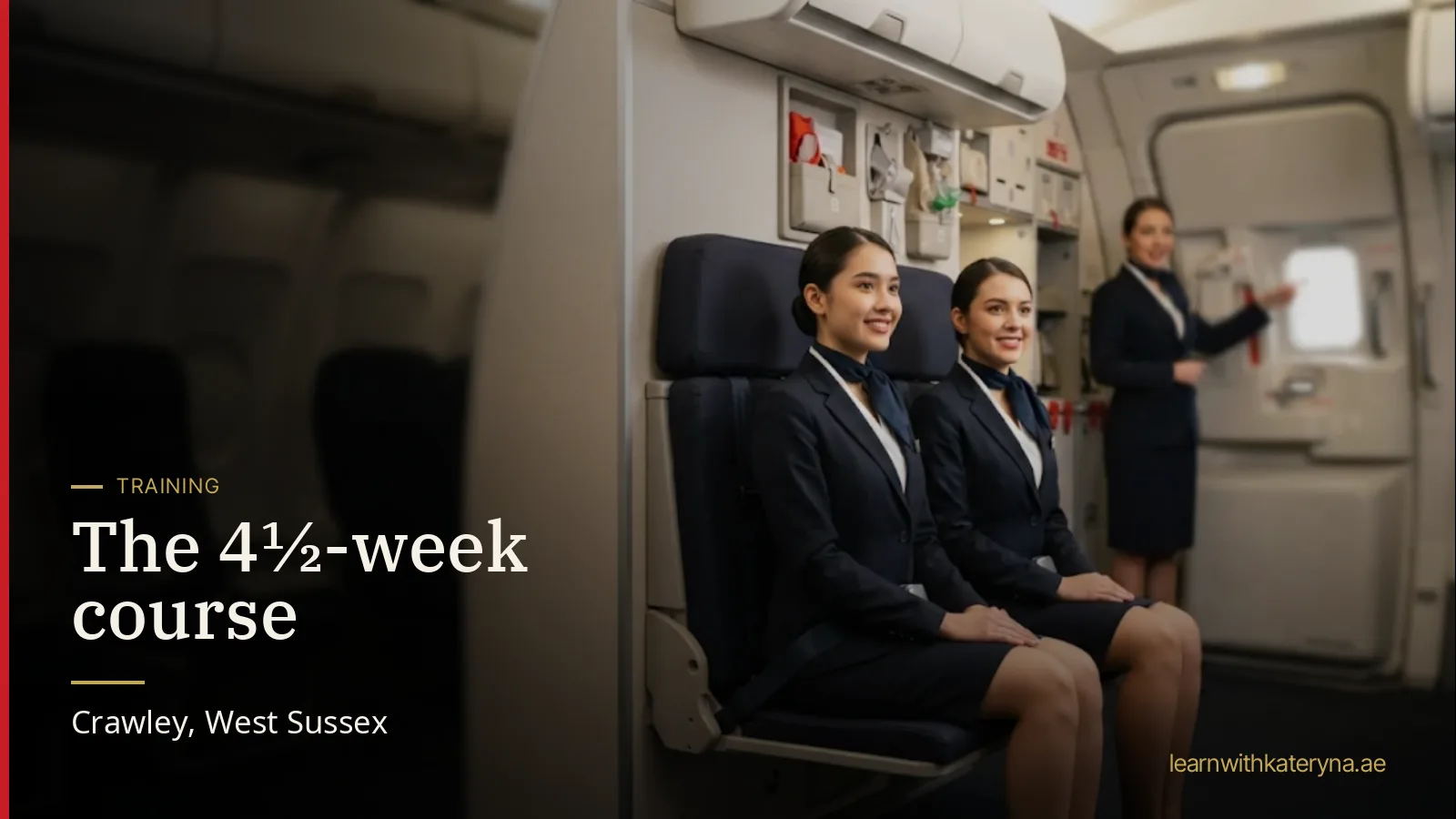
The cabin crew page says your training is a 4½-week programme in Crawley, West Sussex, whether you have flown for years or are getting your wings for the first time. Its stated aim is to give you the confidence to deal with any emergency or medical situation that may arise, on or off duty. The February 2026 advert, as copied, spoke of five weeks of in-person training preceded by seven online modules, so the length differs by a few days between sources; use the live advert for the exact figure.
The page does not say whether you are paid during the training, where you stay if you live far from Crawley, or what happens if you fail an exam. Those are three of the checks at the end of this guide.
When you can apply: what the pages say today
The job search on the careers site, opened on 20 November 2026, showed six jobs and none was cabin crew. The cabin crew page describes an “Apply Now” step as the start of the journey, but the job search shows no cabin crew vacancy to apply to. The last advert closed on 19 February 2026, and the advert noted that the closing date could be adjusted depending on application volumes.
What that means in practice:
- Virgin says a reply to a cabin crew application takes one to three months on average, because it receives a large response, and that it responds to every candidate by email.
- If an application is unsuccessful, Virgin advises external applicants not to apply for the same role again within a six-month period.
- It does not offer work-experience placements, and says so because of the volume of requests.
- Rounds appear and close; there is no published calendar, so check the careers site rather than relying on a summary. Prepare your CV, your right-to-work documents and your references now.
After the first year: CSS and Flight Service Manager
The cabin crew page names two steps above crew: the Cabin Service Supervisor, who coaches and inspires the cabin crew team, and the Flight Service Manager, who combines customer service with management and is an ambassador of the airline’s values. It publishes no minimum time in the job and no requirements for either, so do not read a timeline into the order. For how promotion works across airlines, see the easyJet cabin crew guide, which sets out that airline’s 12-month route to Cabin Manager.
Virgin Atlantic, easyJet or Emirates: what each one publishes
The comparison does not say one employer is better. It shows what is published, because that decides how much you can plan before you apply. The easyJet column comes from our easyJet guide (read 19 November 2026); Emirates lines come from its careers page.
| Virgin Atlantic (20 Nov 2026) | easyJet (19 Nov 2026) | Emirates | |
|---|---|---|---|
| Minimum age | 18 at application | 18 | 21 |
| Physical rule | 210 cm arm reach; brace position in a 45 cm jump seat; no height range found | 157.5–190 cm, no shoes | 160 cm minimum |
| Experience | Not needed on the careers page; two years customer-facing in the Feb 2026 advert | No flying; 6 months customer-facing is “a great fit” | At least one year in hospitality or customer service |
| Training | 4½ weeks, Crawley | 4 weeks | 7.5 weeks |
| Pay published | In the last advert, not on the careers page | No | Yes |
| Selection | Online situational judgement test, then assessment day | Online test, then a virtual interview | Assessment day |
The shortest reading: Virgin is the only one of the three that has put a pay figure into a recent advert and also the only one that tells you its reach and jump-seat tests. Emirates asks for more (age, experience) and tells you the pay. Whichever you consider, read the source behind each line instead of the summary.
Seven checks before you apply
The gaps above are all questions. Ask them in writing, before you invest in a notice period or a move:
- Which round is it, and what are the experience and qualification lines in the live advert? In February 2026 it asked for two years in a customer-facing role and three GCSEs at specific grades.
- Is trip pay inside or on top of the basic salary? The careers page and the February advert word it differently.
- Are you paid during the 4½-week course, and is any cost deducted later?
- Where do you stay during training if you do not live near Crawley, and who pays?
- Can you complete the checks? Five years of references with gaps explained, a criminal records certificate, and one for each country where you lived for six months or more.
- Do you meet the physical lines? Measure your reach, check the jump-seat brace position, and confirm the swim requirement in the live advert.
- Are you applying through the real site? Apply only through the Virgin Atlantic careers site. The only fee the pages mention is for the criminal records check, after an offer, as part of pre-employment screening. A request for money at any earlier stage is not part of the process described.
If an answer will not be given in writing, that is itself an answer. And if you want your situational test and assessment day rehearsed with someone who has been through airline recruitment, the consultation below is the place. Kateryna flew for Emirates, not Virgin Atlantic, so the work there is on what is the same at every airline: the group exercise, the behavioural questions and the judgement-style test.